


Nickel Ore Processing Plant: The Ultimate Guide to Sulfide Flotation & Beneficiation
Driven by the exponential growth of Lithium-Ion Batteries (specifically NMC—Nickel Manganese Cobalt chemistries) for Electric Vehicles, the demand for "Class 1 Nickel" has never been higher. While laterite nickel ores (mined mostly in tropical regions) supply the stainless steel industry via energy-intensive pyrometallurgy, it is the Nickel Sulfide Ores that provide the most direct, cost-effective, and environmentally sustainable route to the high-purity nickel sulfates required by battery manufacturers.
However, extracting nickel from hard rock sulfide deposits is a metallurgical high-wire act. The primary nickel mineral, Pentlandite, is almost always inextricably locked in a matrix with Copper (Chalcopyrite) and massive amounts of Iron Sulfide (Pyrrhotite). If your nickel processing plant fails to successfully depress the iron and float the nickel, your concentrate will be heavily penalized by smelters—or rejected entirely.
As a globally recognized EPC (Engineering, Procurement, and Construction) contractor, OreSolution specializes in designing bankable Nickel Ore Production Lines. This comprehensive engineering guide decodes the complexities of copper-nickel bulk flotation, the critical "MgO Penalty," and how to manage the dreaded Pyrrhotite problem.
In nickel sulfide beneficiation, your biggest enemy is often not the other metals, but the gangue minerals—specifically Talc, Serpentine, and Chlorite. These magnesium-rich (MgO) minerals are naturally floatable. If MgO exceeds 5% to 7% in your final concentrate, the smelting temperature required increases dramatically, leading to massive financial penalties. MgO depression is a central pillar of modern nickel plant design.
Part 1: The Polymetallic Battlefield - Nickel Sulfide Mineralogy

Before selecting a Ball Mill or flotation reagent, a comprehensive mineralogical analysis is mandatory. A standard nickel sulfide deposit is a complex polymetallic puzzle.
Part 2: Comminution - Unlocking the Pentlandite
The goal of the crushing and grinding circuit is to liberate the Pentlandite from the Pyrrhotite and the silicate host rock. However, nickel minerals are relatively soft compared to quartz and can easily over-grind into unrecoverable "slimes."
- Crushing Circuit: High-capacity Jaw Crushers and Cone Crushers are standard. Many modern high-tonnage nickel plants incorporate HPGR (High-Pressure Grinding Rolls) to induce micro-cracks in the ore, improving liberation.
- Grinding Strategy: Due to the intimate locking of Pentlandite and Pyrrhotite, a "Stage-Grinding" approach is crucial. The ore is first ground in a SAG Mill or primary Ball Mill to a relatively coarse size (e.g., P80 = 75-100 microns) to float the easily liberated Copper and Nickel. The rougher concentrate or tailings are then sent to a secondary Regrind Mill to liberate the finer, heavily interlocked particles before cleaner flotation.
Part 3: Flotation Architecture - Bulk vs. Differential
Once the ore is liberated, the nickel flotation process begins. Because copper and nickel float under similar conditions, metallurgists must choose the correct flowsheet architecture.
The Copper-Nickel Separation Stage
If Bulk Flotation is used, the resulting concentrate is a mix of Copper and Nickel. To separate them, we use the Lime-Cyanide Method or the Heating Method.
- By drastically raising the pH with Lime and adding small amounts of Sodium Cyanide (or environmentally friendly alternatives), the Pentlandite (Nickel) is strongly depressed.
- The Chalcopyrite (Copper) remains floatable and is collected in the froth, leaving the high-grade Nickel concentrate at the bottom of the Flotation Cells.
Part 4: Conquering the Two Enemies - Pyrrhotite & Talc
A high-quality Nickel Ore Production Line is defined by how it handles its impurities.
1. Depressing Iron (Pyrrhotite)
If Pyrrhotite is allowed to float, your nickel grade will drop from a premium 15% Ni down to an unsalable 5% Ni.
The Solution: Pyrrhotite is highly sensitive to alkaline environments. By adding Lime (CaO) to the flotation slurry to raise the pH to around 9.5 - 10.5, the surface of the Pyrrhotite oxidizes rapidly, making it hydrophilic (it sinks). Meanwhile, Pentlandite continues to float using Xanthate collectors.
2. Depressing MgO (Talc/Serpentine)
As mentioned in the alert box, naturally floatable magnesium silicates (Talc) will ruin your concentrate. Because they float without any collectors, simply cutting back on reagents won't work.
The Solution: We must use powerful polymer depressants. CMC (Carboxymethyl Cellulose) or Guar Gum are added to the slurry. These large, sticky molecules selectively coat the Talc particles, rendering them hydrophilic and forcing them into the tailings.
Part 5: Dewatering the Concentrates

The final output consists of two separate products: a Copper Concentrate and a Nickel Concentrate. Both emerge as wet slurries (approx. 25-30% solids) and must be rigorously dewatered before shipping to smelters.
The slurries are independently pumped to massive High-Efficiency Thickeners, where flocculants concentrate the solids to 60%+. The thickened slurry is then processed by automated Filter Presses to produce dry, stackable filter cakes with less than 10% moisture, minimizing transport costs and preventing TML (Transportable Moisture Limit) shipping hazards.
FAQ: Troubleshooting Nickel Sulfide Plants
A: You are floating too much gangue. First, check your Iron (Fe) levels. If iron is high, your Pyrrhotite depression is failing—increase your Lime dosage to raise the pH. Second, check your MgO levels. If MgO is high, Talc is floating—you need to increase your CMC or Guar Gum depressant dosage.
A: This is a classic metallurgical challenge. In many deposits, a small percentage of nickel is "solid-solutioned" directly inside the iron lattice of Pyrrhotite. Mechanical grinding and flotation cannot separate this. To recover this specific nickel, the Pyrrhotite tailings must be subjected to bio-leaching, pressure oxidation (POX), or roasting. This requires a major CAPEX addition to the plant.
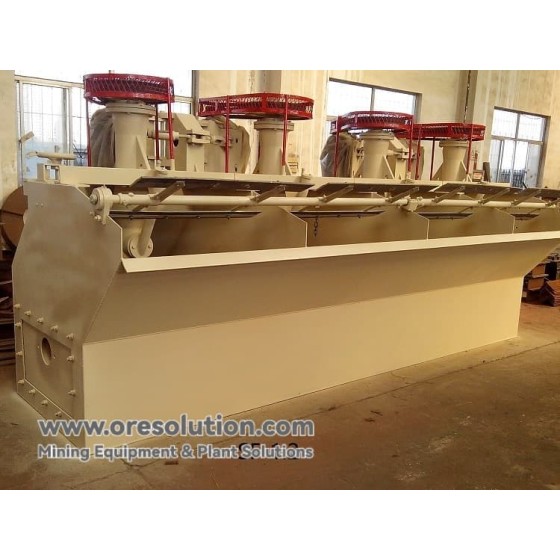
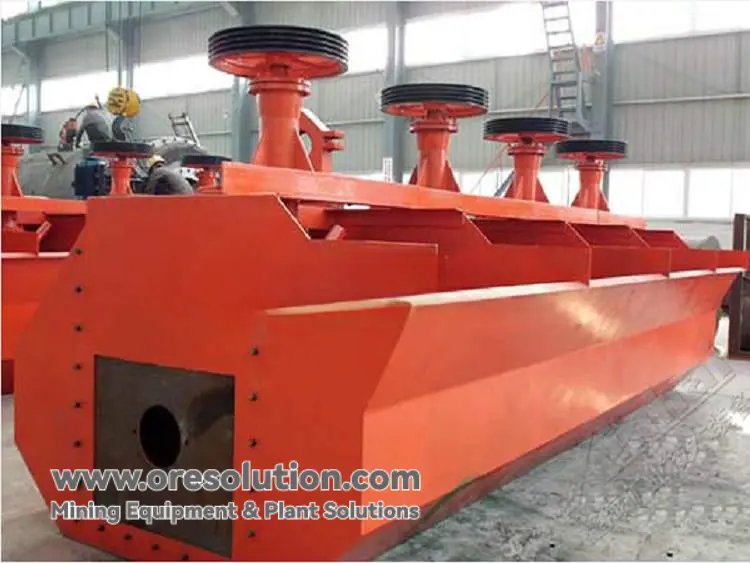
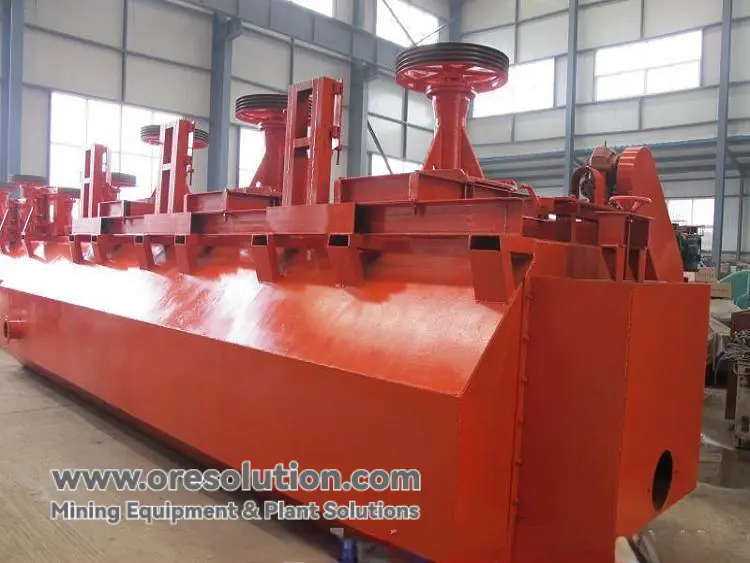
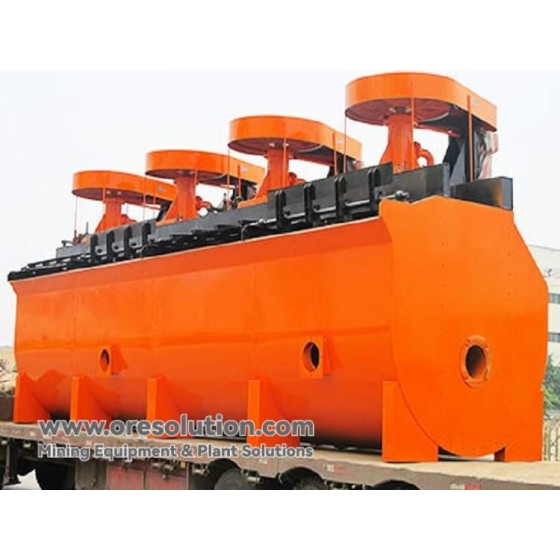
A: Nickel sulfide flotation—especially the cleaning stages—requires very deep, stable froths and precise control over air volume. Air-Inflated Cells (KYF/XCF types) use external blowers, allowing operators to fine-tune the air input independently of the impeller speed. This precision is critical for maintaining the delicate balance between floating Pentlandite and depressing Pyrrhotite.
Conclusion: Designing for EV Battery Dominance
A modern nickel sulfide processing plant is an exercise in extreme chemical precision. Treating it like a simple copper plant will result in a concentrate riddled with MgO and Iron, destroying the economic viability of the mine.
At OreSolution, we let comprehensive metallurgical testing dictate our EPC designs. From defining the exact CMC depressant dosage required to combat your specific talc levels, to engineering the intricate bulk-flotation and regrind circuits, we deliver turnkey Nickel Production Lines that meet the stringent purity demands of the global Class 1 Nickel market.
Are you developing a Nickel Sulfide deposit to supply the EV revolution? Contact OreSolution today to consult with our senior process engineers and begin designing your high-purity flotation plant.